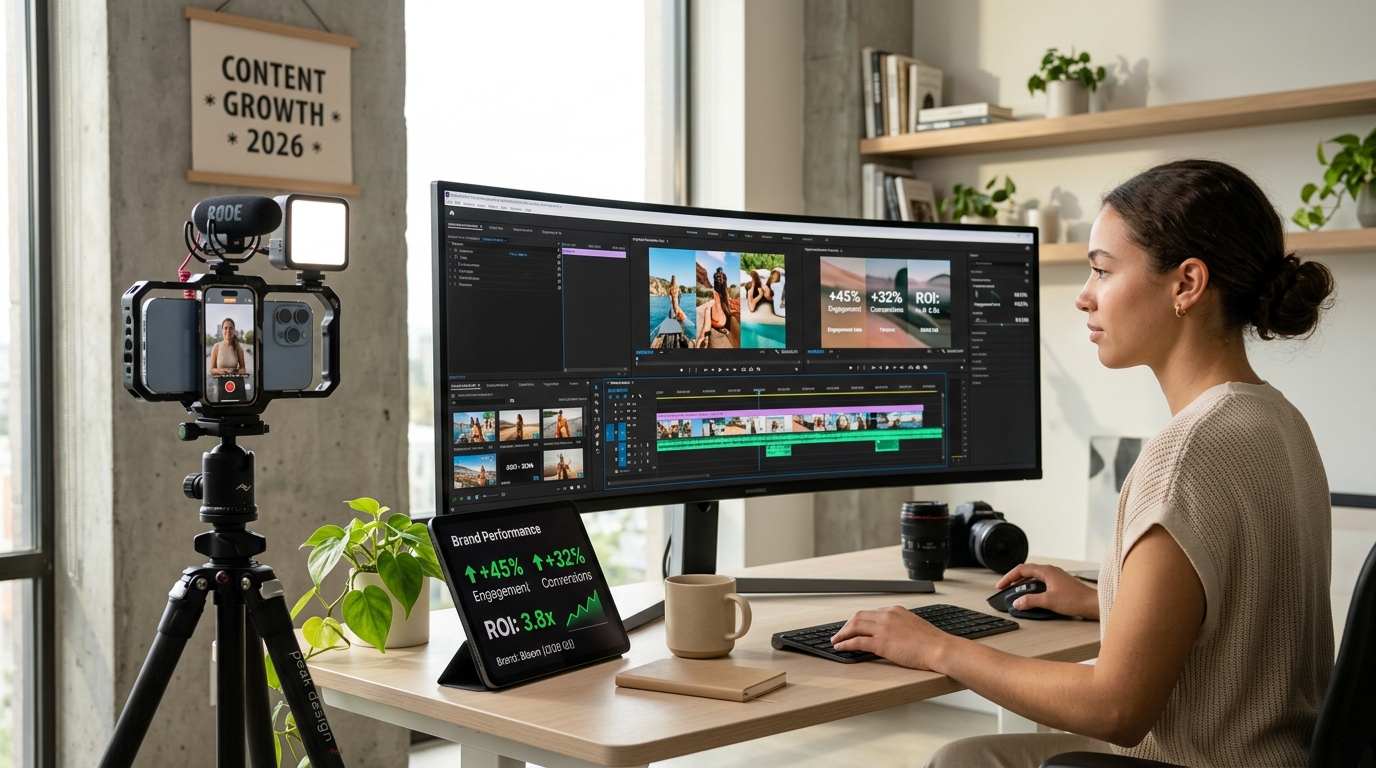
Influencer marketing has evolved dramatically.
A few years ago, the basic formula was simple:
Find a big creator → pay them → get a post → move on.
That still happens. But it isn't how the highest-performing brands operate anymore.
In 2026, the brands achieving real ROI treat creators less like rented billboard space and more like an integrated part of their entire marketing engine.
Here are the 8 creator strategies getting the most traction right now.
01 Smaller Creators with the Right Audience
Follower count is no longer a reliable proxy for campaign success.
A creator with 30,000 subscribers who focuses almost exclusively on budget European travel can drive 10x more bookings for a travel app than a lifestyle creator with 500,000 followers whose audience watches for casual entertainment.
That doesn't mean large creators don't work. It means savvy brands prioritize audience alignment and engagement over raw vanity metrics.
02 Long-Term Brand Partnerships
One sponsored post can create a quick spike in awareness. But repeated partnerships build durable familiarity and trust.
Instead of hiring 20 new creators every month, brands are signing multi-month ambassador relationships with a core roster.
- The creator learns the product deeply and pitches it naturally.
- The audience sees the brand integrated across different trips and seasons.
- The brand discovers exactly what content angles and formats convert best with that creator's audience.
It eliminates the friction of constantly starting from scratch with cold creators.
03 Creator Content Repurposed into Paid Ads
This is one of the most profitable shifts in 2026.
Brands no longer rely solely on a post's organic feed lifespan. When a creator makes a video that performs well organically, the brand licenses the content and puts paid media spend behind it across Meta, TikTok, and YouTube Shorts.
This gives brands the best of both worlds: authentic creator credibility combined with targeted, scalable distribution.
04 UGC is Overtaking Standard Sponsored Posts
User-Generated Content (UGC) is transforming production pipelines.
Brands often don't need a creator to publish to their own followers. Instead, they hire creators specifically to shoot high-energy, relatable video demonstrations for the brand's own website, TikTok channels, and ad accounts.
You aren't buying the creator's audience — you're buying their ability to create content that feels like a recommendation from a friend.
05 Performance-Based & Hybrid Deals
Brands are demanding measurable downstream results. Views are great, but sales, sign-ups, and downloads matter most.
This has driven the rise of hybrid contract structures:
$1,000 base fee + 10% affiliate commission on tracked sales.
The creator gets guaranteed baseline compensation for their production time, while the brand aligns incentives directly with actual performance.
06 Less Polished, More Human Content
Audiences have developed sharp radar for corporate ad scripts. High-production commercials disguised as creator videos often get scrolled past immediately.
The highest converting content in 2026 is unpolished, natural, and candid:
- A travel creator troubleshooting a flight delay in real time.
- A raw voiceover while walking through an airport terminal.
- Casual smartphone camera angles instead of rigid tripod studio lighting.
When the integration feels like an organic part of the creator's day, viewer retention and click-through rates soar.
07 Involving Creators in the Creative Process
Instead of handing creators a rigid, 5-page creative brief with exact talking points, top brands ask a simple question:
“What kind of story would your audience actually love to watch about this?”
Creators spend 365 days a year understanding what their community clicks, watches, and comments on. Involving them in concept ideation prevents forced product placements and results in dramatically better engagement.
08 Smaller, Curated Creator Experiences
The era of packing 40 random influencers onto a private jet for photo ops has shifted.
Travel and lifestyle brands are now hosting smaller, hyper-curated trips with 3 to 6 creators who share natural chemistry and thematic relevance. The emphasis is on authentic experiences, creator autonomy, and immersive storytelling that resonates deeply with viewers.
So What Does This Mean for Your Brand?
Influencer marketing in 2026 isn't just about finding the biggest account and paying them to post.
It's about building a versatile creator ecosystem:
- Targeting dedicated niche creators with strong audience affinity
- Securing usage rights to turn winning creative into high-ROI paid ads
- Structuring hybrid deals tied to measurable sales
- Giving creators the creative freedom to tell real stories
“Creators are no longer just a distribution channel. They are your studio, your copywriters, and your most credible brand advocates.”
The 2026 Creator Playbook